Stop Counting Heads, Start Shifting Norms.
"We are not measuring our campaign on head counts or the total reach but the change in the mindset, change in the laws (and) enhancing institutions' responsiveness to different actors…We want to measure the impact that happens in the communities."
That's Mona, a young Shifter from Egypt, speaking (through her translator/fun adult, Christeen) on a recent SHIFT Africa cross-regional call. It's the kind of statement that sounds obvious when you read it. But if you've ever written a campaign report, you know the first question that lands on your desk is almost always: how many people did you reach? Egypt's Shifters decided that's the wrong first question.

The problem with counting
Counting isn't bad. But a campaign that draws a crowd and a campaign that shifts how a community thinks about certain beliefs are not the same thing, even if the attendance numbers might be identical. When Chrispine, SHIFT's Africa Lead, heard Egypt's presentation, his reaction was immediate:
"For too long, many countries have focused on how many people we reached. That's okay, it's a quantitative measure. But it doesn't tell us the whole story. It doesn't tell us what exact change has happened. Taking a step further to look at how the norms are shifting, how behaviours are changing…that's where we should be heading."
Egypt, it seems, is already there; However, that's not to say it's easy. Measuring shifts in community norms is harder than counting attendance since it takes more time, more thought, and often more resources than young campaigners have to hand. But it doesn't have to be perfect to be valuable. What matters most is that Shifters understand why measuring change matters in the first place, and then find practical ways to capture even small pieces of evidence.
Three campaigns, one mindset
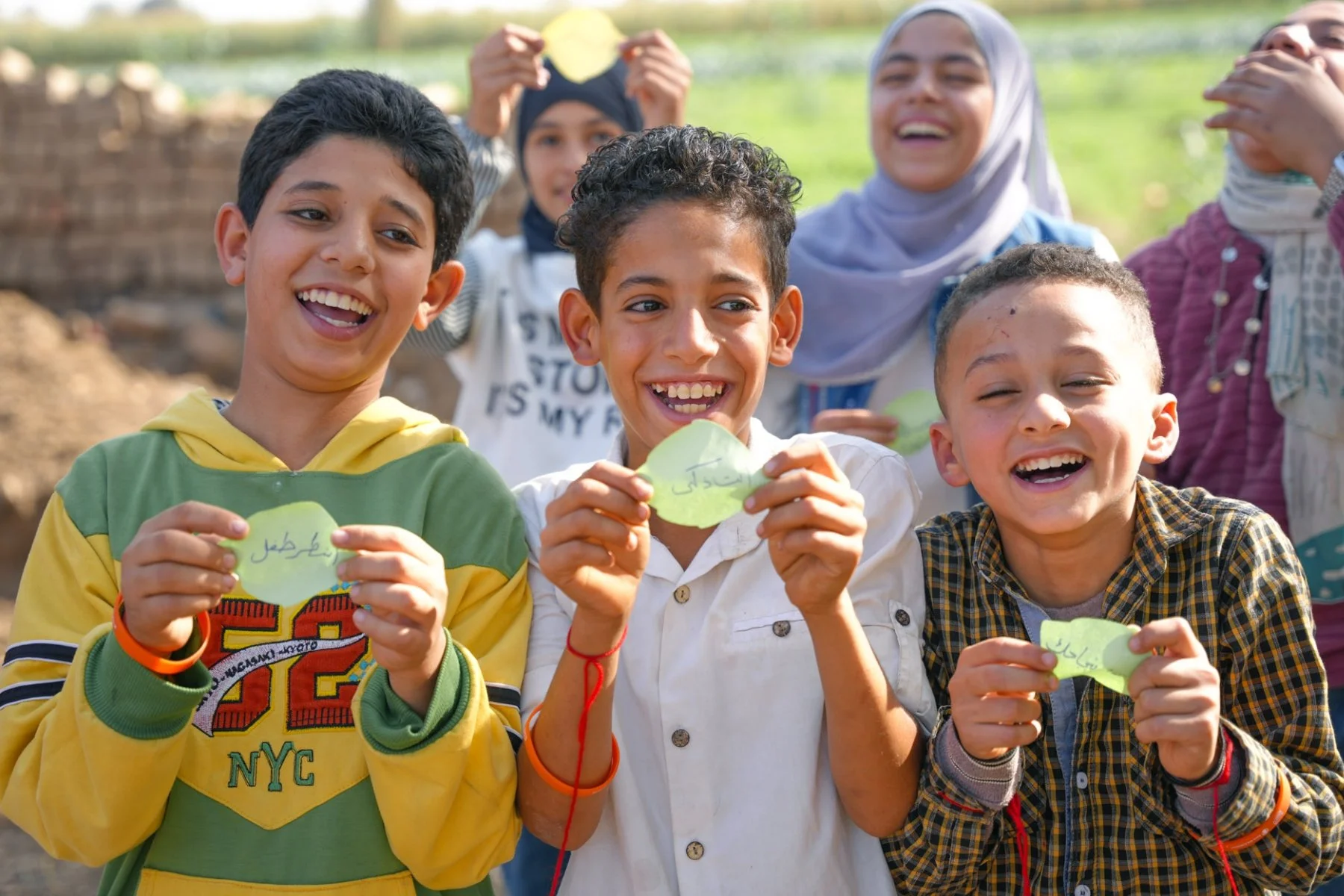
Three separate Shifter groups in Egypt (Monsha’at El-Maghalqa Shifters tackling emotional abuse, Al-Ashmounin Shifters tackling child labour, and El-Mahras Shifters tackling sexual harassment) have adopted the same approach to measuring impact. All three use pre- and post-campaign surveys, focus group discussions, and success stories collected not as decoration, but as evidence of whether attitudes are actually shifting on the ground.
This didn't happen by accident. Aya and Christeen, Egypt's Fun Adults, deliberately mainstreamed this mindset across all three campaigns. Every group understands that turning out big participation numbers is great for getting your message out, but it doesn't show how you've influenced a community.
It also isn't something handed down to Shifters as a checklist. Aya and Christeen describe their own role less as directing the work and more as backing it: Shifters choose which issue to take on, design the tools they'll use, and decide what evidence is worth collecting. When a campaign challenges an official or negotiates a school visit, it's Shifters at the table as decision-makers and campaign leaders, not simply young people carrying out an adult-designed plan of activities.
The campaigns also make a deliberate effort to bring in groups who are often left out of the conversation entirely, including people with disabilities and their caregivers, as both participants in campaign activities and voices in shaping what the campaigns ask for.
One detail captures this beautifully. The campaign tackling emotional abuse designed an initiative called One Week Without Screaming: a pledge that challenges families to go seven days without raising their voice at their children. It's not measuring whether parents showed up to a session. It's testing whether they can change a behaviour and reflect on what that felt like.
From awareness to accountability
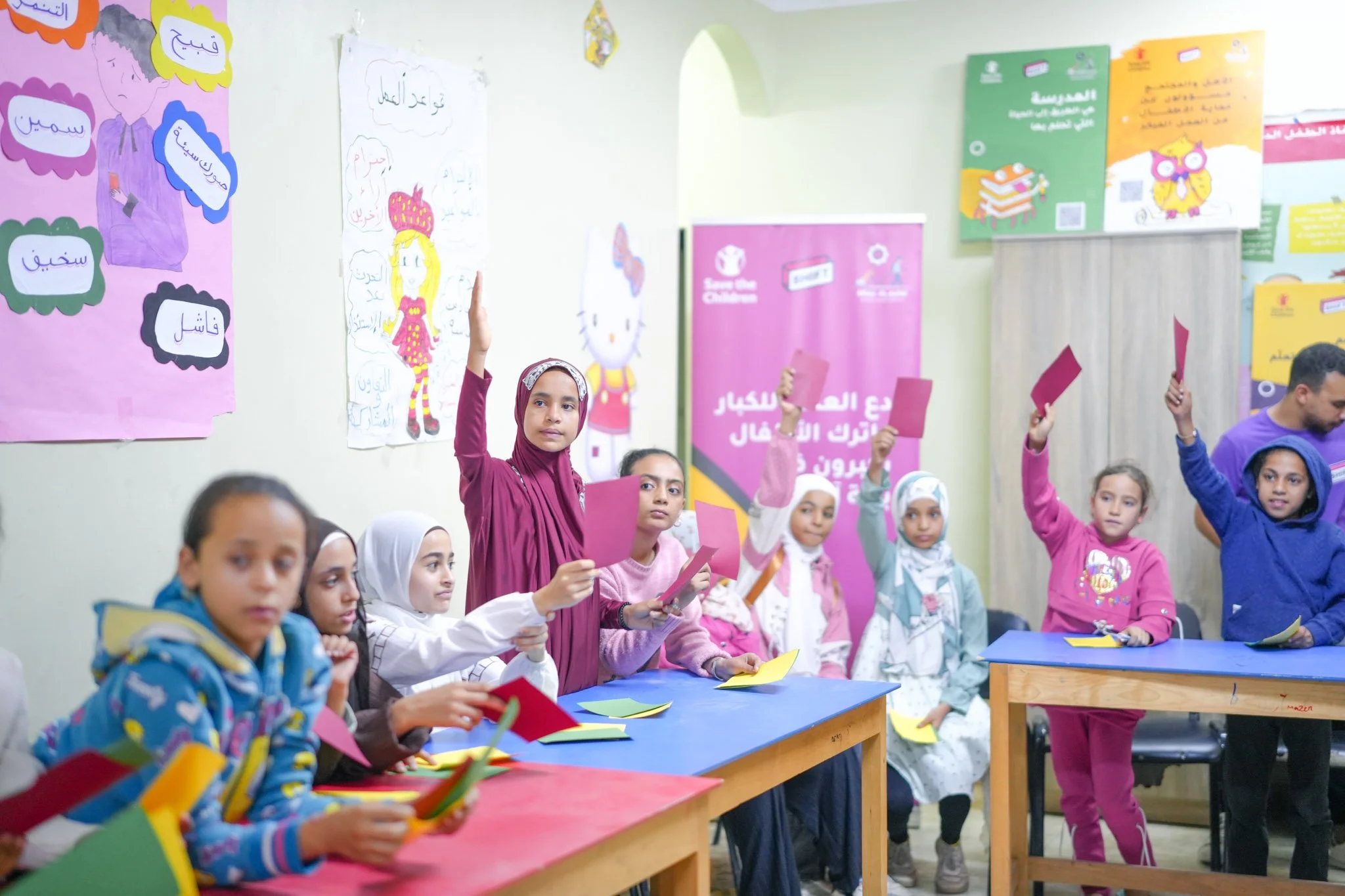
The campaign challenging emotional abuse started, like many campaigns do, with awareness: interactive theatre, community sessions and sports days. That work mattered because it built trust with a community that didn't even recognise emotional abuse as harm. "As long as there are no scars on the body, it's not abuse" was the prevailing attitude.
But this year, the groups have consciously moved beyond awareness into social accountability: engaging governmental officials, lobbying for stronger workplace inspections, meeting with the National Council for Childhood and Motherhood (NCCM), and pushing for institutional responsiveness from child protection committees and social solidarity ministries.
The clearest evidence of that shift shows up in schools. Working with the psychological education official at the Ministry of Education, along with psychological education supervisors and school psychologists, Shifters advocated for strengthening school-based mental health support. They pushed to reinforce the role of school psychologists, psychological support rooms, and complaint boxes as channels that actually function. Officials responded positively, agreeing to follow up with activities in schools to raise awareness of mental health and how to report concerns, with Shifters joining officials on the school visits themselves.
Chrispine named this for what it is: "the maturity framework we've been talking about. I'm happy to hear that this is what is happening in Egypt." When young people move from telling their community about a problem to holding institutions accountable for solving it, that's influence in action.
Egypt's Shifters aren't waiting for the sector to catch up. They're already measuring what matters and building the evidence to prove it works. Measuring shifts in community norms will never be as simple as counting heads. But Egypt's Shifters show that it's possible even with limited resources, on difficult topics, and even when the tools are as simple as a pledge, a survey, or a conversation that asks what actually changed?